Creating a Culture of Reading for Pleasure in Schools: Why It Matters and How to Encourage It
Ideas Hive At the beginning of a new school year, as teachers, we’re looking for ways to inspire children to love learning and develop strong
Join in with the Big Debate Club‘s question of the week discussion.
We think YES YES YES!
Aside from being incredibly enjoyable, narratives that have visual aids can be extremely helpful, especially for those who find it hard to understand what might be happening in a story. Pictures speak 1000 words and can improve children’s sense of storytelling and mood. This can be a lifeline for students with dyslexia and ADHD for whom visual concepts can be a powerful tool for helping them to develop meaning around what they are reading.
Visual stories are also a fantastic way to explore and learn new vocabulary. Words written in the panels can be expressed with all their nuances through pictures in a way that a text without pictures cannot always achieve.
Check out our graphic novel comprehension resource, which proves that graphic novels are a fantastic way to build children’s comprehension skills and their love of reading.
Hilda and the Troll Graphic Novel Reading Comprehension
What do you think? Join the debate this week at bigdebateclub.com
Picture books are another wonderful way to capture children’s interest and provide lots of opportunities to practise their comprehension skills.
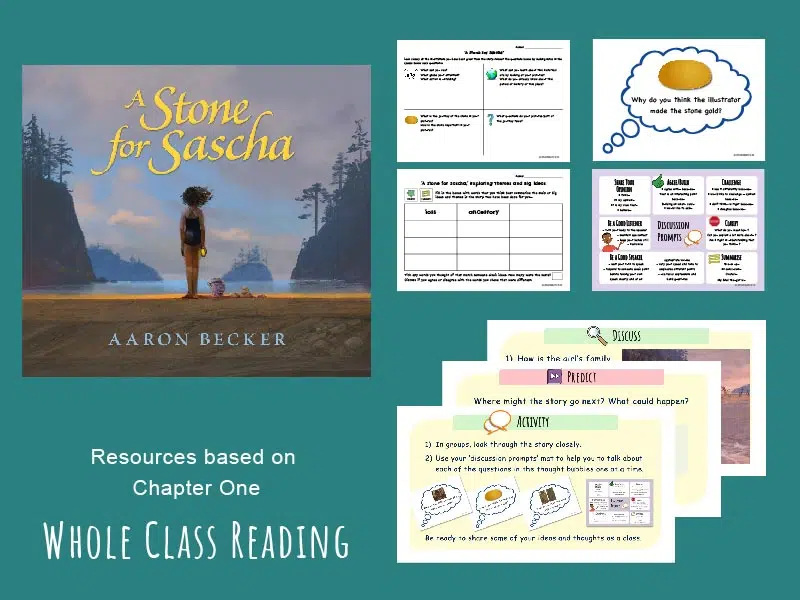
One of my favourite authors is Aaron Becker, best known as the author and illustrator of the wordless Journey trilogy. Check out the trailer for his latest book on his website.
We have also made some resources based on ‘A Stone for Sascha’, a lesser-known picture book by Aaron Becker, bursting with opportunities for debate. We recommend this series of lessons to UKS2, Year 5.
Ideas Hive At the beginning of a new school year, as teachers, we’re looking for ways to inspire children to love learning and develop strong

Idea’s Hive Blog Share This Post Children’s Mental Health Week 2025 is taking place from 3-9 February 2025. As we approach Children’s Mental Health
Subscribe now to keep reading and get access to the full archive.
Get notified about new resources and offers.
Submitting your details indicates that you are happy for MyTeachingHive to contact you about relevant services and offers. You can unsubscribe at any time.
We are committed to keeping your information safe. Read our Privacy Policy to find out more.
Login to your account